Here’s a common misconception: throw an athlete into a magnesium pool and it doesn’t matter what they do once they’re in there, the magnesium will do all the work. Swim laps, float on your back, or just sit still on the steps, the thinking goes, and you’ll get the same recovery benefit either way. That’s not quite right, and understanding why can change how you actually use a magnesium pool after training or competition.
The truth is that how you move (or don’t move) in a magnesium pool changes what your body gets out of the session. Swimming, floating, and soaking each ask something different of your muscles, your nervous system, and your joints. Picking the right one for the day matters more than most people realise.
TLDR: Magnesium pools support recovery through a mix of magnesium absorption, buoyancy, and water temperature, but swimming, floating, and soaking each deliver different benefits. Swimming suits active recovery days, floating is best for nervous system rest and joint relief, and soaking works well for deep muscle relaxation after heavy training. The best choice depends on how fatigued you are and what your body needs that day.
Why Magnesium Pools Are Used for Athletic Recovery
Magnesium is one of those minerals that gets a lot of attention in sports recovery circles, and for good reason. It plays a role in muscle relaxation, nerve function, and reducing that tight, wound-up feeling after intense exercise. Athletes are often low in magnesium anyway, since it’s lost through sweat during hard training sessions.
A magnesium pool lets the body absorb some of this mineral through the skin while also giving you the general benefits of water immersion, like reduced joint load and improved circulation. It’s not a miracle cure, but it’s a genuinely useful tool when used the right way.
What the Water Actually Does
- Supports muscle relaxation and reduces post-exercise tension
- Takes weight off joints thanks to buoyancy
- Encourages blood flow, which helps clear metabolic waste from tired muscles
- Can improve sleep quality when used in the evening
Who Tends to Benefit Most
Endurance athletes, strength athletes doing heavy leg or back sessions, and anyone recovering from repeated high-impact training tend to notice the biggest difference. If you’re managing joint stiffness or chronic muscle tightness, magnesium pool sessions can be a useful addition to your weekly routine.
Swimming in a Magnesium Pool: Active Recovery
Swimming laps in a magnesium pool is a form of active recovery. You’re keeping the body moving at low intensity, which helps flush lactic acid and keeps blood flowing to fatigued muscles without adding new strain.
This approach works well the day after a heavy session, when your body isn’t destroyed but still feels sluggish. Gentle, rhythmic movement through water can loosen things up faster than sitting still would.
When Swimming Makes Sense
- The day after moderate to hard training, not immediately after
- When you feel stiff rather than deeply fatigued
- If you want to keep some cardiovascular activity going on a rest day
When to Skip It
If you’re completely wrecked, dehydrated, or dealing with an acute injury, swimming laps probably isn’t the right call. In that state, your body needs stillness and rest more than movement, even gentle movement.
Floating: Letting the Body Switch Off
Floating is a different exercise entirely. Instead of moving, you let the water hold you, often on your back, arms relaxed, barely engaging any muscles at all. This is where the nervous system benefit really shows up.
When you’re not fighting gravity or bracing muscles, your body has a chance to shift out of that alert, “on” state that heavy training puts you in. Floating is less about the muscles and more about calming the whole system down.
Benefits of Floating After Training
- Reduces nervous system tension after high-stress competition or training blocks
- Takes pressure completely off the spine and joints
- Can help with racing thoughts or trouble winding down post-event
- Low effort, so it suits athletes who are genuinely exhausted
Best Time to Float
Floating tends to work best straight after a major event, a race, a heavy competition day, or a training block where you’ve pushed close to your limit. It’s also a good option in the evening if sleep has been a struggle.
Soaking: Deep Muscle Recovery
Soaking is the most passive option, but that doesn’t make it the least useful. Sitting or reclining in the magnesium pool for a longer stretch gives the muscles sustained exposure to warmth and magnesium, without any movement demand at all.
This is generally the go-to after the heaviest sessions, think leg day, a long run, or a match that left your whole body sore. The longer, still exposure allows deeper penetration into tight muscle groups.
Why Soaking Suits Heavy Fatigue
- No movement required, which suits athletes who are simply spent
- Longer exposure time supports deeper muscle relaxation
- Warmth helps ease stiffness in areas like the lower back, hamstrings, and shoulders
How Long Is Long Enough
Most athletes find somewhere between fifteen and twenty-five minutes strikes the right balance. Longer isn’t automatically better, and soaking for too long can leave you feeling drained rather than refreshed, especially if the water is warm.
Choosing Between Swim, Float, or Soak
There’s no single correct answer here, and that’s really the point. The right choice depends on your fatigue level, your training schedule, and what your body is asking for that day.
A Simple Way to Decide
- Feeling stiff but not exhausted: swim gently
- Feeling mentally fried or wired after competition: float
- Feeling deep muscle soreness after a heavy session: soak
Combining Approaches
Plenty of athletes actually combine all three in one session, a few easy laps to start, some floating in the middle, and a soak to finish. There’s nothing wrong with that, as long as you’re listening to how your body responds rather than following a strict formula every time.
Finding What Works for Your Recovery
Whether you swim, float, or soak really comes down to what your body needs on any given day, and there’s real value in learning to read those signals rather than sticking to one method out of habit. Vikasati brings heat, cold and magnesium pool therapies together in one complete bathhouse experience. Whether you want to swim gently, float, soak tired muscles or move between hot and cold facilities, you can tailor each visit to how your body feels.
For just $49, enjoy 90 minutes of access at our Brisbane, Toowoomba and Gold Coast locations, including:
- Finnish sauna: Traditional traditional dry heat to relax and unwind
- Ice baths: Cold immersion at 5°C
- Infrared sauna: Gentle gentle, soothing heat
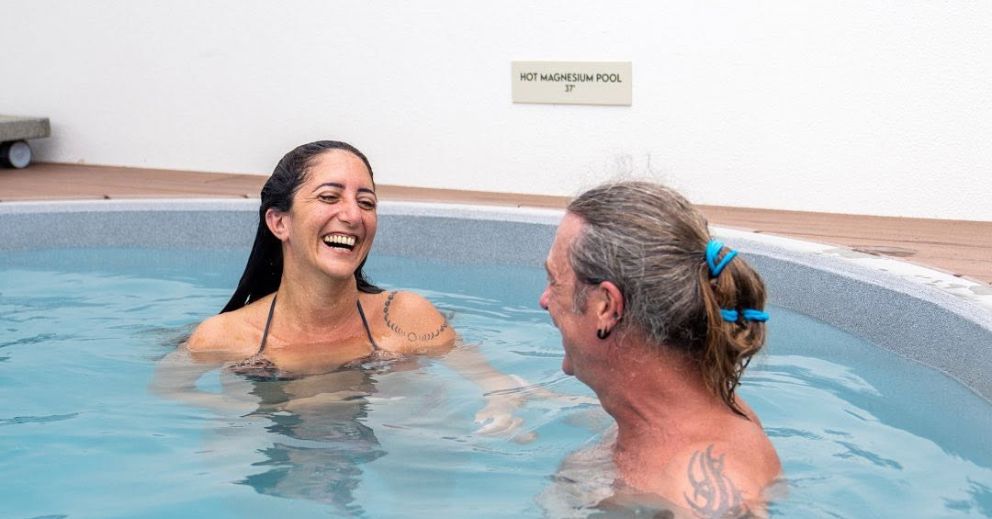
- Magnesium pools: Warm and cool pools for swimming, floating or soaking
Whether it’s your first visit or part of your regular recovery routine, our team is here to help you get the most from your session. Book your Vikasati bathhouse experience today.
.
Key Takeaways
- Magnesium pools support recovery through mineral absorption, buoyancy, and warmth, not just by being magnesium-infused water
- Swimming suits active recovery on days when you’re stiff rather than fully fatigued
- Floating is best for nervous system rest and works well after intense competition
- Soaking supports deep muscle relaxation and suits heavy training days
- The right approach changes depending on your fatigue level, not a fixed rule
FAQ
Can I use a magnesium pool if I have an open cut or skin condition?
It’s worth being cautious here, as broken skin can sting in magnesium-rich water and some skin conditions may react. If you’re unsure, check with a health professional before your session, particularly if the condition is active or inflamed.
How soon after a race or hard session should I get in the water?
Many athletes find waiting until they’ve cooled down and rehydrated a little works better than jumping straight in while still overheated. Somewhere between thirty minutes and a few hours after finishing is a common window, though it varies from person to person.
Does the water temperature matter for recovery results?
Yes, temperature changes the effect quite a bit. Cooler water tends to suit active recovery and swimming, while warmer water supports the deep relaxation you’re after when soaking or floating.
Will one session be enough to notice a difference?
A single session can leave you feeling looser and calmer, but the bigger recovery benefits tend to show up with regular use across a training block. Think of it as a habit that compounds rather than a one-off fix.
Is a magnesium pool safe to use frequently during a heavy training period?
For most healthy athletes, regular sessions are fine and often genuinely helpful during demanding blocks. If you have any underlying health conditions, particularly related to the heart, kidneys, or blood pressure, it’s sensible to get medical advice first.