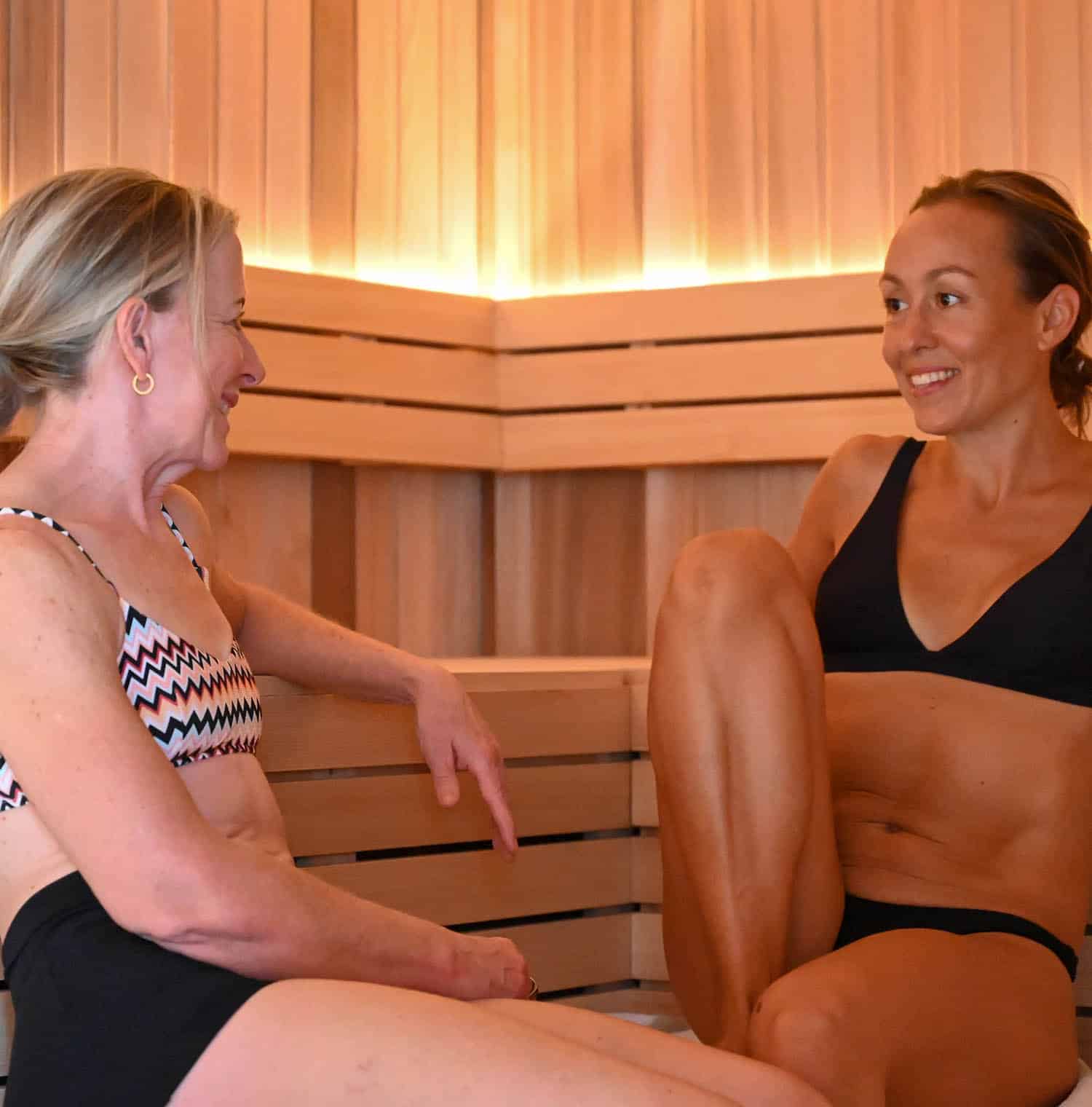
Here’s a simple way to think about it: sit down, warm up, stretch out, cool down, repeat. That’s the basic shape of a sauna routine built for people who spend most of their day at a desk.
If you’ve ever stood up after hours of sitting and felt your hips lock and your lower back groan, this routine is designed with exactly that problem in mind.
TLDR: Long hours at a desk shorten your hip flexors and stiffen your lower back, and a structured sauna session (warm up, stretch inside the heat, cool down, repeat) can help loosen that tightness far more effectively than a random sit-in-the-heat approach. Aim for two or three short cycles of 10 to 15 minutes with some gentle movement worked in, a few times a week.
Why Desk Work Tightens Your Hips and Back in the First Place
Sitting for long stretches shortens the muscles at the front of your hips, the hip flexors, because they’re held in a folded position for hours on end. Your lower back often compensates by tightening up too, especially if your chair or desk setup isn’t quite right.
It’s not just about being uncomfortable at the end of the day. Over time, this pattern can affect your posture, your walking stride, and even how well you sleep.
Common Signs You’re Carrying Desk Tension
- Stiffness when you first stand up after sitting
- A dull ache across the lower back by mid-afternoon
- Tight or “pinchy” feeling at the front of the hips
- Reduced range of motion when reaching to touch your toes
- Shoulders creeping up towards your ears without noticing
Why Heat Helps More Than Stretching Alone
Stretching a cold muscle is a bit like trying to bend a stiff rubber band. Heat increases blood flow and makes muscle tissue more pliable, so stretches go deeper and feel less forced.
That’s the whole logic behind pairing sauna heat with movement rather than just sitting still and sweating. The warmth does some of the work before you even start stretching.
Building a Sauna Routine for Tight Hips and Back
You don’t need a complicated plan here. A basic structure that works well for most desk workers is warm up, stretch, cool, repeat, done two or three times per session.
Step-by-Step Sauna and Stretch Cycle
- Sit or lie in the sauna for 5 to 7 minutes to let your muscles warm through
- Spend 3 to 5 minutes doing gentle hip and back stretches while you’re still in the heat
- Step out and cool down for a few minutes, moving slowly rather than lying flat
- Repeat the cycle two or three times, easing off if you feel light-headed
Total time usually lands somewhere between 30 and 45 minutes, which fits neatly after a work day without eating into your whole evening.
Stretches That Work Well in the Heat
- Seated forward fold to release the lower back
- Low lunge hold to open the front of the hip
- Gentle spinal twist while seated
- Figure-four stretch for the outer hip and glute
- Child’s pose style fold if space allows
Move slowly and stop well short of pain. The heat makes muscles feel looser than they actually are, so it’s easy to overstretch without realising.
How Often Desk Workers Should Use a Sauna for Hip and Back Relief
Two to three sessions a week is a reasonable starting point if you’re new to combining heat with stretching. Some people prefer shorter, more frequent sessions, especially if their job involves very long sitting stretches most days.
Fitting It Around a Working Week
An after-work session tends to suit desk workers best, since it lets you unwind the day’s tension before it carries over into the next morning. A lunchtime session can also work if your schedule allows for a proper cool-down before heading back to your desk.
Signs You Might Need to Adjust the Routine
- Feeling more fatigued than relaxed afterwards
- No noticeable change in stiffness after a few weeks
- Ongoing dizziness or headaches during sessions
- Back pain that feels sharp rather than tight or dull
If any of these show up consistently, it’s worth scaling back the frequency or checking in with a health professional, particularly if the back pain feels different from ordinary stiffness.
Getting the Basics Right Before You Start
A good sauna routine for hip and back relief still depends on the fundamentals, hydration, timing, and listening to your body.
Hydration and Timing
Drink water before and after your session, not during, since sipping while stretching in heat isn’t always practical. Avoid going in on a completely empty stomach or right after a heavy meal.
What to Avoid
- Pushing stretches to the point of sharp pain
- Staying in longer than 15 to 20 minutes per single sitting
- Sauna sessions late at night if they leave you too alert to sleep
- Combining heat sessions with intense exercise on the same day without adequate rest
Easing Desk Tension With a Simple Heat and Stretch Routine
Tight hips and a stiff back don’t have to become a regular side effect of desk work. Combining sauna heat with gentle stretching and a proper cool-down can help loosen tight muscles and give your body time to reset after long hours of sitting.
For just $49, enjoy 90 minutes of access to Vikasati’s premium bathhouse facilities in Brisbane, Toowoomba and the Gold Coast, including:
- Finnish Sauna – Warm up tight muscles before stretching
- Ice Baths – Cool down and feel refreshed after your sauna
- Infrared Sauna – Enjoy gentle, penetrating heat to help your body unwind
- Magnesium Pools – Alternate between warm and cool water to relax and reset
Whether you’re managing stiffness from desk work or simply want to move and feel better, Vikasati makes it easy to build heat, stretching and recovery into your regular routine. Book your 90-minute session today.
Key Takeaways
- Prolonged sitting shortens hip flexors and stiffens the lower back over time
- A warm up, stretch, cool, repeat structure gets more out of a sauna session than passive sitting
- Two to three sessions a week is a reasonable starting frequency for most desk workers
- Move slowly and stop short of pain, since heat can mask how far you’re actually stretching
- Sharp pain, dizziness, or ongoing fatigue are signs to adjust the routine or seek advice
FAQ
Can a sauna routine replace regular stretching or physio work?
It’s best thought of as a complement rather than a replacement. Sauna heat makes stretching more effective, but it doesn’t address underlying posture or movement issues the way targeted exercise or physiotherapy can.
How soon will I notice less tightness in my hips and back?
Some people feel looser immediately after a single session, but lasting change in daily stiffness usually takes a few weeks of consistent sessions. Desk posture during work hours also plays a big role in how quickly things improve.
Is it better to stretch in the sauna or right after stepping out?
Stretching while still in the heat generally gives better results, since muscle tissue cools and stiffens again within a few minutes of leaving. A short stretch immediately after stepping out can still be useful as a follow-up.
Do I need any special clothing or equipment for this routine?
No special gear is needed beyond a towel to sit on and comfortable, minimal clothing suited to heat. Bare feet and loose movement are usually more practical than trying to stretch in restrictive clothing.
What should I do if my back pain feels worse rather than better after sauna sessions?
Worsening pain, especially if it’s sharp or radiates, is a signal to stop the routine and check in with a doctor or physiotherapist rather than pushing through. Sauna heat is meant to ease general stiffness, not mask or work through injury-related pain.